Maidenhair Fern Earrings: 4 Details Inspired by Adiantum
-
- Post Date: 27 Aug, 2026

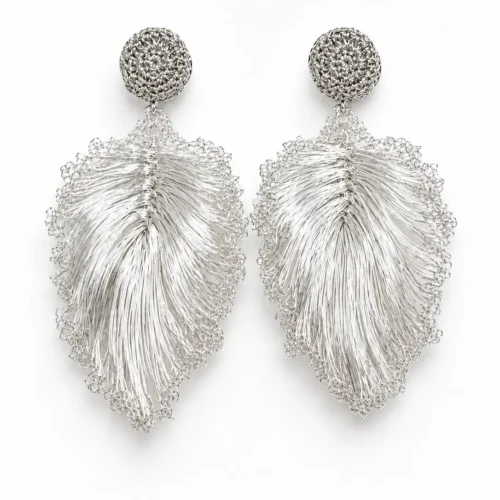
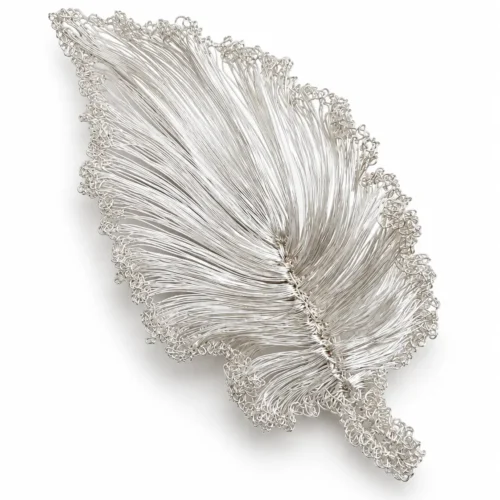
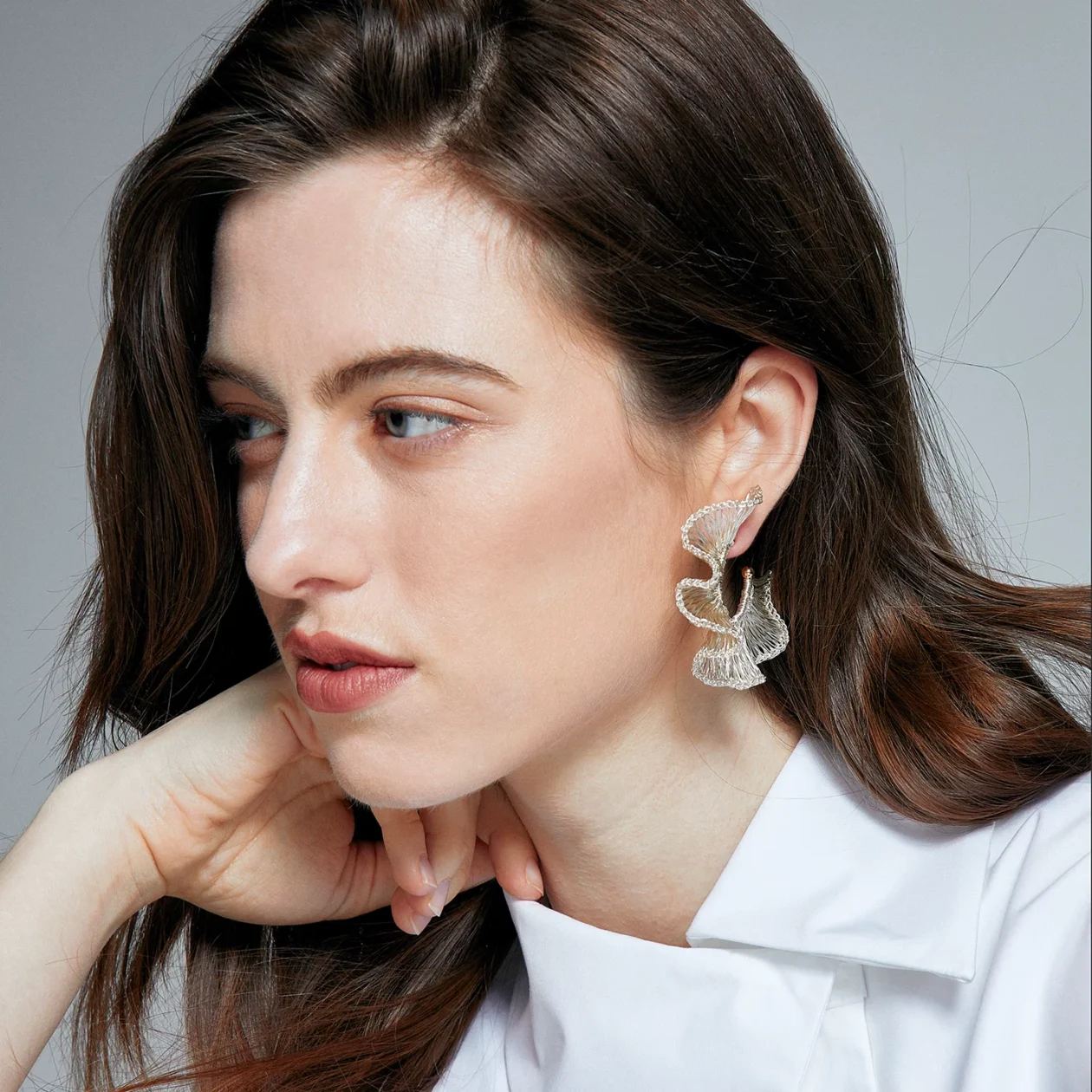
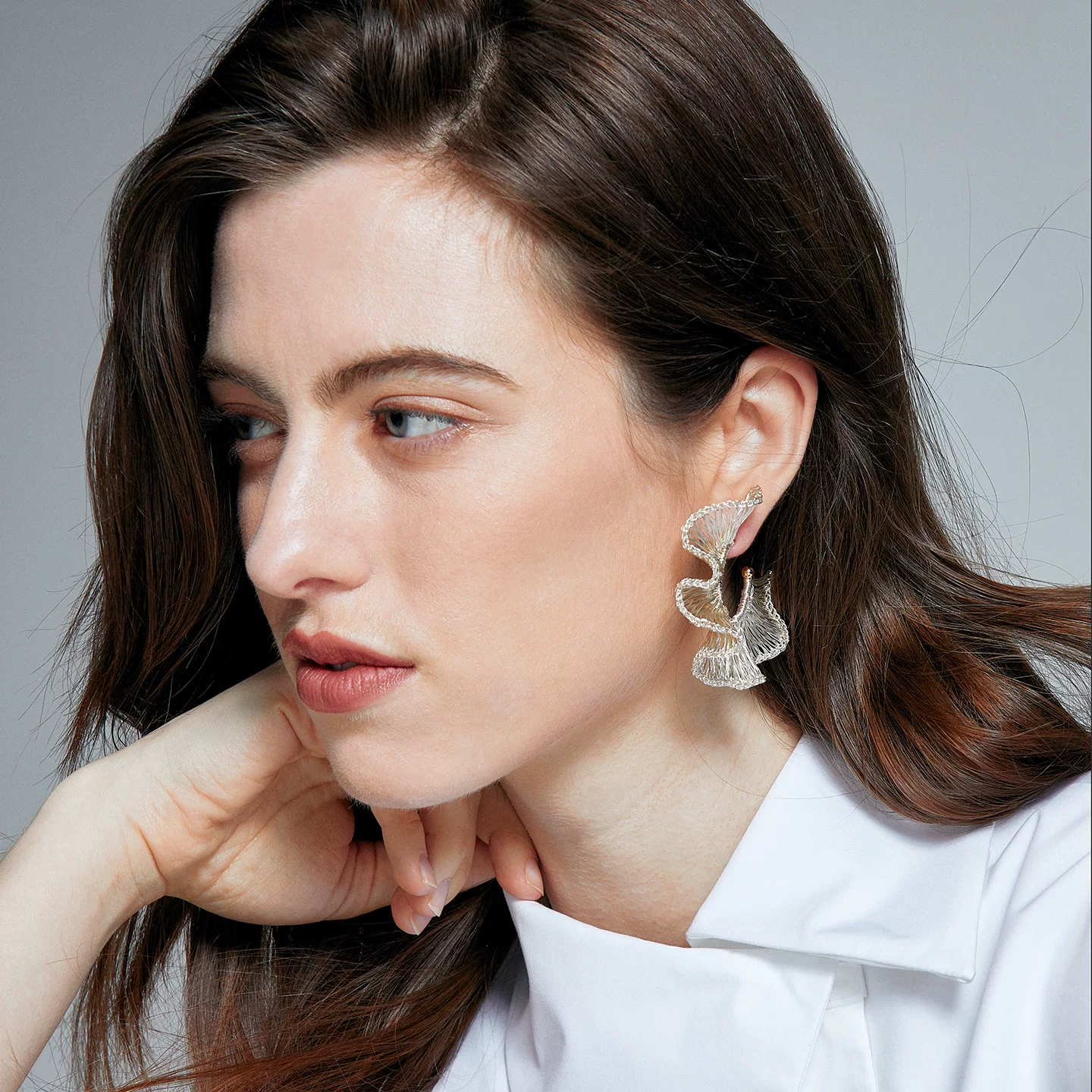
Maidenhair fern earrings translate the delicate rhythm of Adiantum into an open, sculptural form shaped from fine metallic wire. Fan-like sections radiate around a circular center, while a pale beaded edge traces the outline with a quiet, luminous finish.
Rather than reproducing a fern leaf literally, OREYNE focuses on four defining details: the plant’s fan-shaped leaflets, its repeating radial lines, the contrast between structure and softness, and the movement created by an airy circular silhouette. Together, these elements turn botanical observation into jewelry designed to shift with the wearer.
The Maidenhair Fern Behind the Design
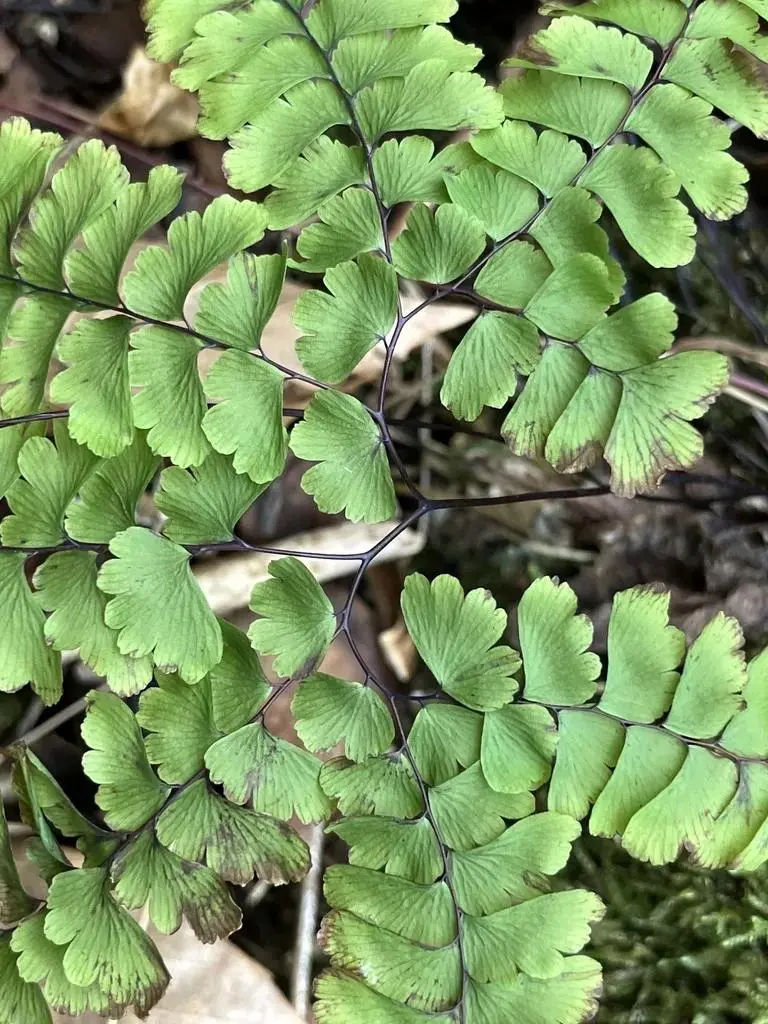
Maidenhair ferns belong to the genus Adiantum. Their fronds are divided into small leaflets carried on slender, often dark stems. According to the Royal Horticultural Society, the segments may be fan-shaped, rounded or oblong—forms that give the plant its distinctive lightness.
What makes the fern visually compelling is not one leaf in isolation, but the rhythm created by repetition. Individual leaflets open along fine branching stems, separated by generous areas of space. The frond appears full without becoming visually heavy.
That balance became the starting point for the earrings. Instead of copying the entire plant, OREYNE isolated the expanding fan shape of a single leaflet and developed it into a circular composition. The result preserves the fern’s sense of delicacy while giving it a clear, wearable scale.
How Maidenhair Fern Earrings Translate Fan Shapes into Wire
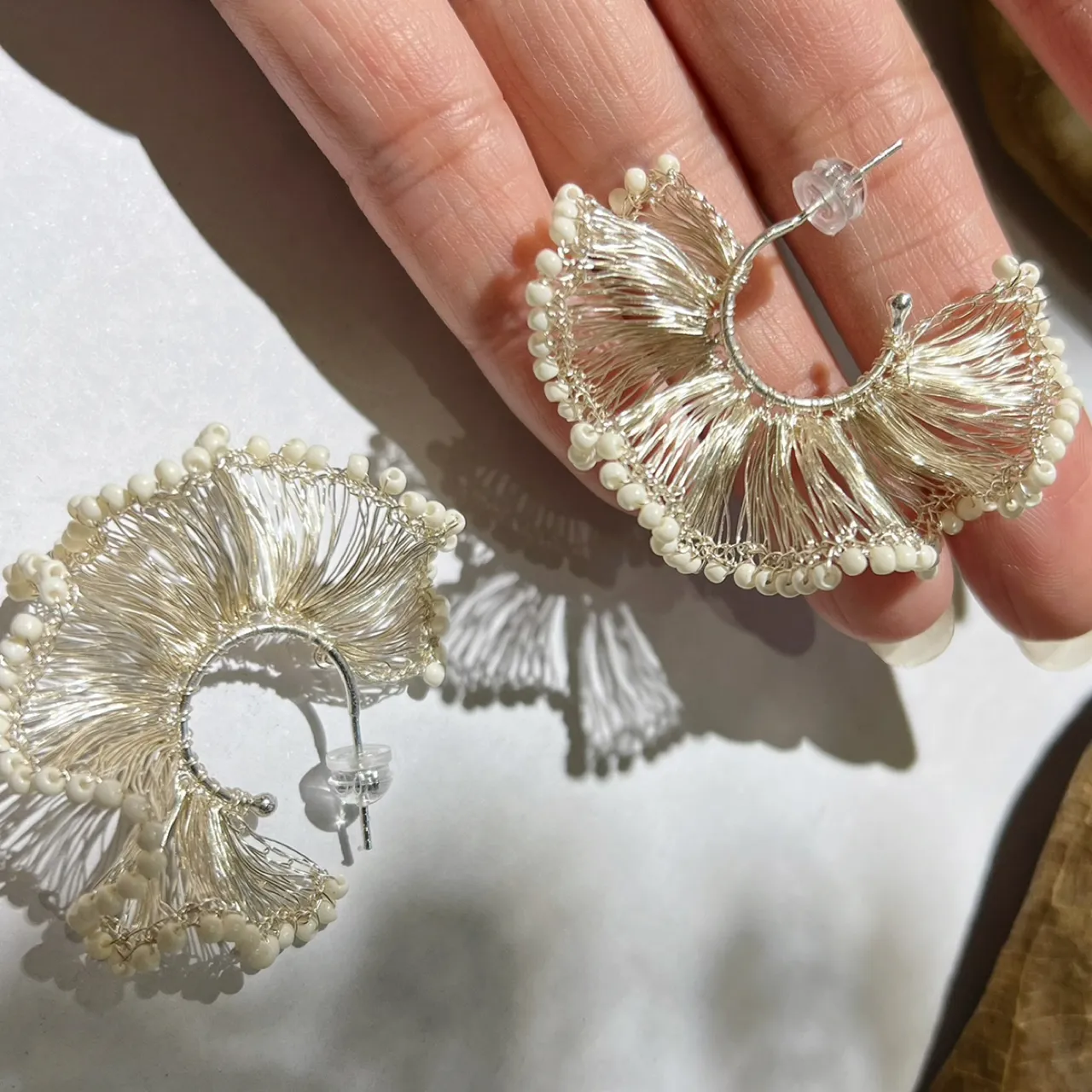
Each section begins with fine silver-tone metal wire arranged into lines that radiate from an open center. The lines spread outward like the veins of a maidenhair leaflet, creating a surface that remains transparent rather than solid.
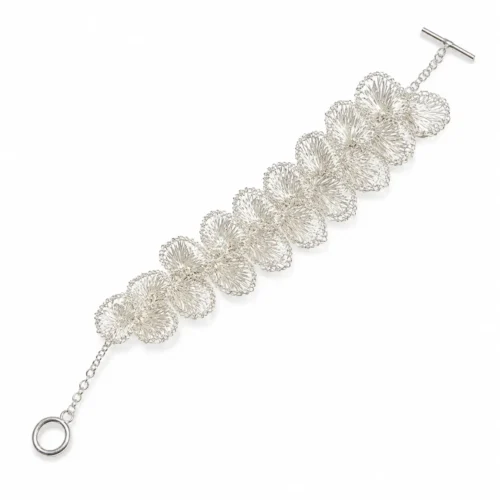
Several fan-like sections are joined into a continuous circle. From a distance, the outline feels complete and graphic. Viewed more closely, the construction reveals individual strands, small variations in spacing and the subtle dimensional changes created by hand shaping.
This open structure is important to the design. A solid metal disc would reproduce only the outline of the botanical source. Handwoven wire allows light and background color to remain visible through the earring, preserving the relationship between leaf, air and space found in the living fern.
The radial arrangement also changes how the metal reflects light. Each strand faces a slightly different direction, so the surface does not produce one uniform shine. Instead, narrow highlights move across the form as the wearer turns.
Beaded Edges and Handwoven Rhythm
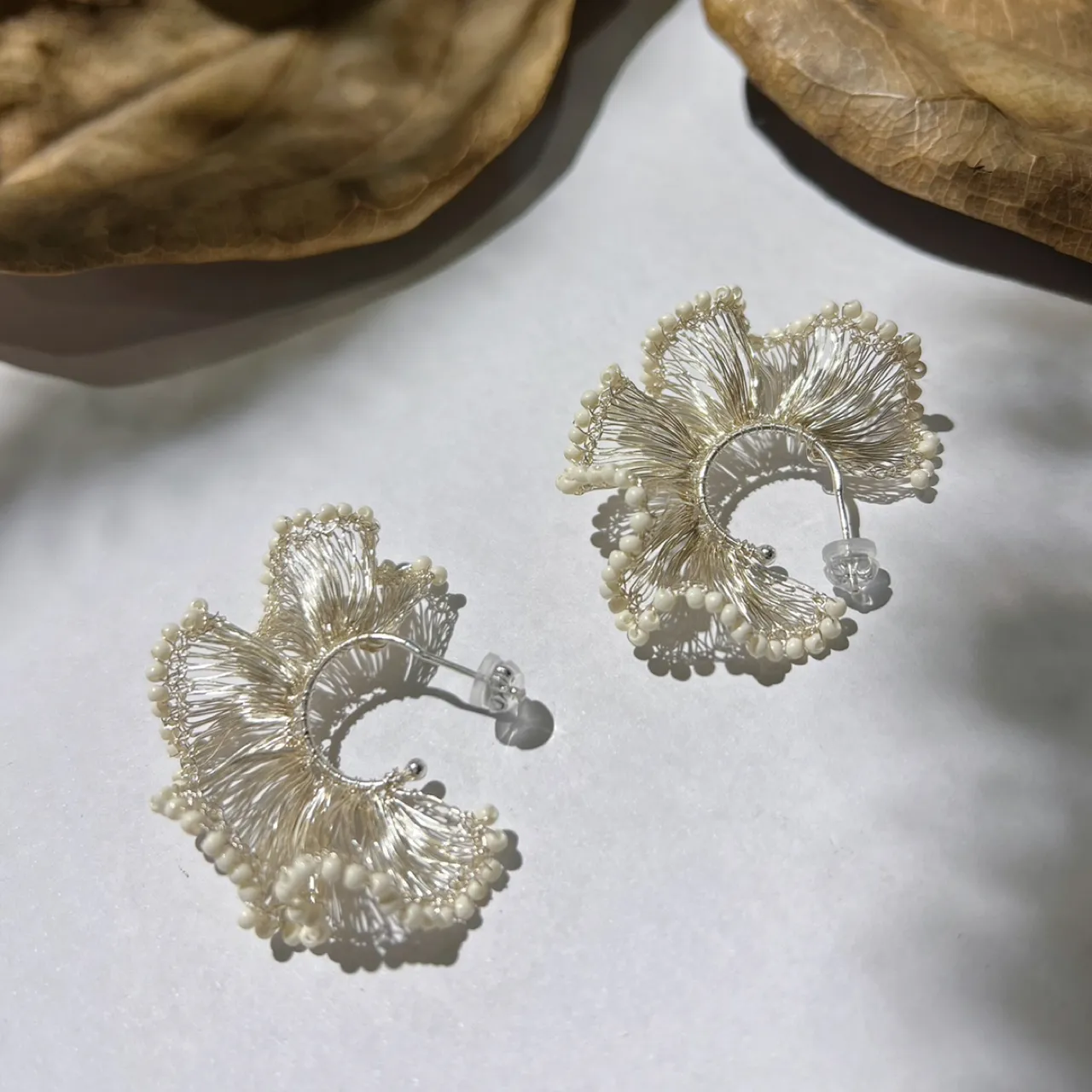
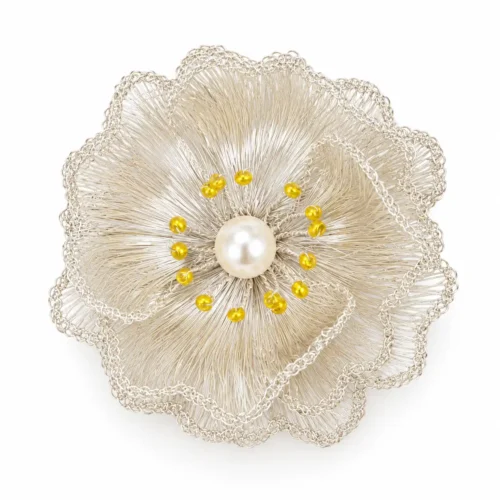
A delicate beaded border follows the outer curves of the earrings. Its purpose is not simply decorative. The small repeated elements clarify each fan-like section and create a measured rhythm around the larger circular silhouette.
The pale beadwork also introduces a softer texture beside the metallic wire. Where the silver-tone lines feel precise and architectural, the edge appears tactile and gently irregular. This contrast reflects the character of maidenhair fern itself: clear underlying structure softened by numerous small leaflets.
Every pair is woven and shaped by hand. Small differences in tension, spacing and curvature are therefore part of the finished piece. They do not interrupt the design; they reveal the process through which many individual lines are gathered into one balanced form.
Seen in close-up, the earrings occupy a space between drawing and sculpture. The wire behaves like a series of drawn lines, while the curved sections create physical depth. The beaded edge completes that transition by giving the open structure a visible boundary.
Light, Movement and Wearable Scale
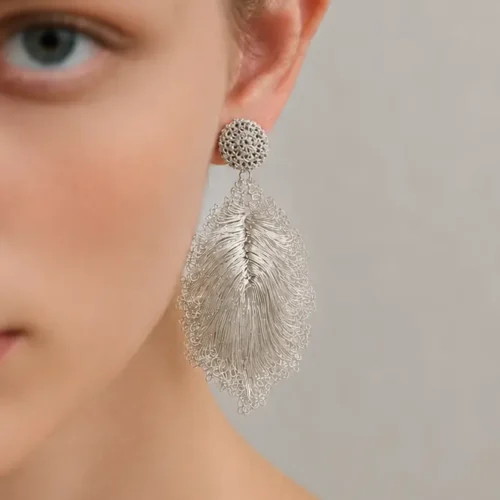
The earrings measure approximately 30 × 40 mm and weigh about 7 g per pair. This creates a noticeable botanical statement beside the face while keeping the construction visually open. They are finished with 925 sterling silver posts; the body is made from hypoallergenic silver-tone metal wire with a long-lasting color finish.
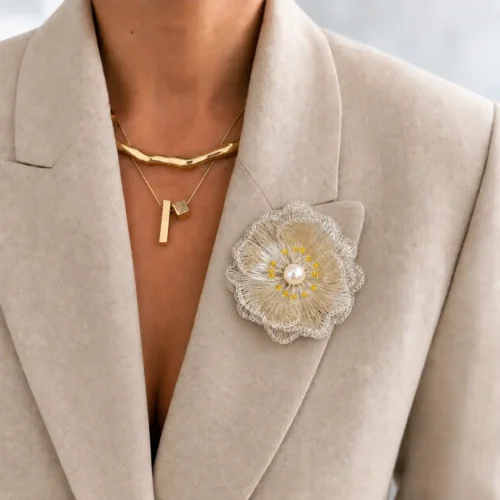
On the ear, the circular structure frames rather than covers. Skin, hair and clothing remain visible through the wire, allowing the piece to respond naturally to its surroundings. Against dark fabric, the radiating lines become more graphic. Against pale or softly textured clothing, the metallic surface appears quieter and more delicate.
Movement introduces another layer. As the wearer turns, the sections overlap from different angles and the beaded outline catches brief points of light. The silhouette shifts between an open circle, a group of fan-shaped leaves and an abstract metallic flower.
The ivory-edged version works especially well with natural fabrics, monochrome tailoring and softly structured evening pieces. Hair worn back gives the full radial construction more space, while loose hair allows parts of the earring to appear and disappear with movement.
These maidenhair fern earrings do not depend on a literal botanical resemblance. Their connection to nature is carried through proportion, repetition and air—the visual principles that make an Adiantum frond feel both intricate and remarkably light.
Discover the OREYNE Botanical Maidenhair Fern Earrings
VIEW THE EARRINGSFrequently Asked Questions
What inspired the OREYNE Maidenhair Fern Earrings?
The design was inspired by the fan-shaped leaflets and repeating structure of maidenhair ferns in the genus Adiantum. OREYNE translated these qualities into radiating sections of handwoven metallic wire.
Are the earrings handmade?
Yes. The fine wire is individually woven, arranged and shaped by hand. Small variations in spacing and curvature reflect the handcrafted process.
Are maidenhair fern earrings heavy?
The pair weighs approximately 7 g. Their open wire construction produces a clear statement scale without the visual density of a solid metal form.
What materials are used?
The earrings are made from hypoallergenic silver-tone metal wire with a long-lasting color finish. The posts are 925 sterling silver, and delicate beads define the outer edges.


Christmas Rose Earrings: 4 Details Inspired by Helleborus Niger
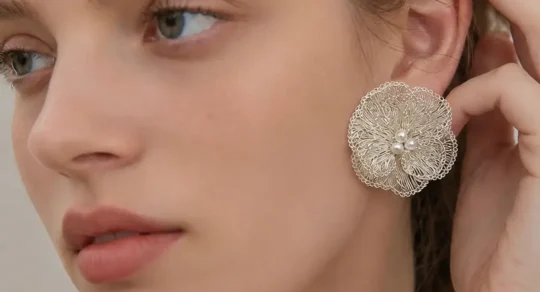
Christmas rose earrings translate the layered structure of Helleborus niger into an open floral form shaped from fine metallic wire. Curving silver-tone sections gather around …
-
- Post Date: 28 Aug, 2026
White Rockrose Earrings: 4 Details Inspired by Cistus
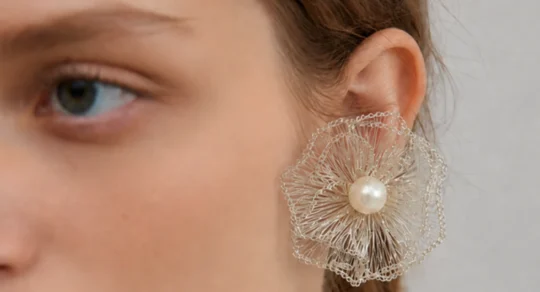
White rockrose earrings translate the softly ruffled form of a Cistus bloom into an open flower shaped from fine silver-tone wire. Five handwoven sections radiate …
-
- Post Date: 28 Aug, 2026

Silver Wire Leaf Earrings: 4 Details Inspired by Licuala Grandis
Silver wire leaf earrings translate the pleated structure of Licuala grandis into an elongated botanical form shaped from fine metallic lines. A slender central vein …
-
- Post Date: 27 Aug, 2026

Barlow Columbine Earrings: 4 Details Inspired by Aquilegia
Barlow columbine earrings translate the layered structure of the White Barlow bloom into a light, cascading form shaped from fine metallic wire. Open silver-tone sections …
-
- Post Date: 27 Aug, 2026
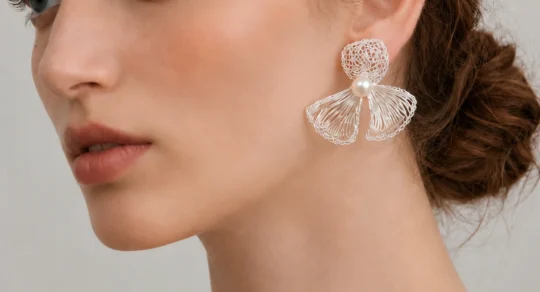
Sweet Pea Flower Earrings: 4 Details Inspired by Lathyrus odoratus
Sweet pea flower earrings translate the soft, folded structure of Lathyrus odoratus into a light sculptural form shaped from fine metallic wire. Silver-tone lines open …
-
- Post Date: 26 Aug, 2026
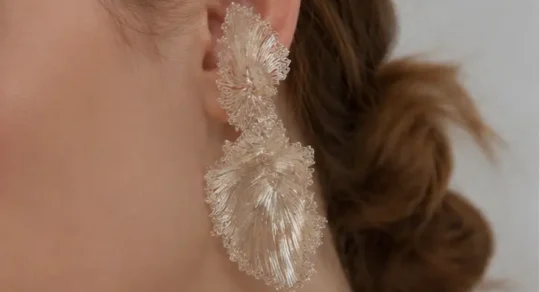
Fan Palm Leaf Earrings: 5 Details Inspired by Licuala Grandis
Fan palm leaf earrings translate the pleated structure of Licuala grandis into a light, sculptural form shaped from fine metal wire. Instead of pressing a …
-
- Post Date: 26 Aug, 2026