Silver Wire Leaf Earrings: 4 Details Inspired by Licuala Grandis
-
- Post Date: 27 Aug, 2026

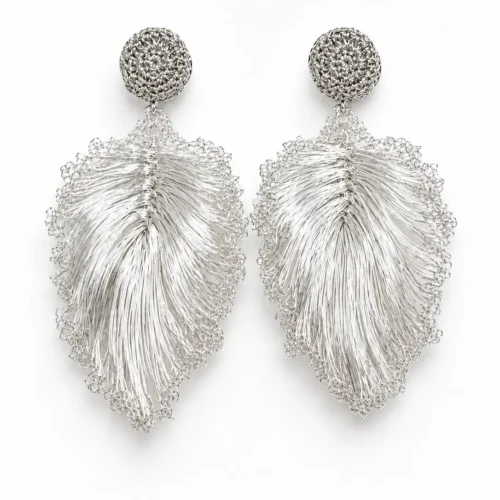
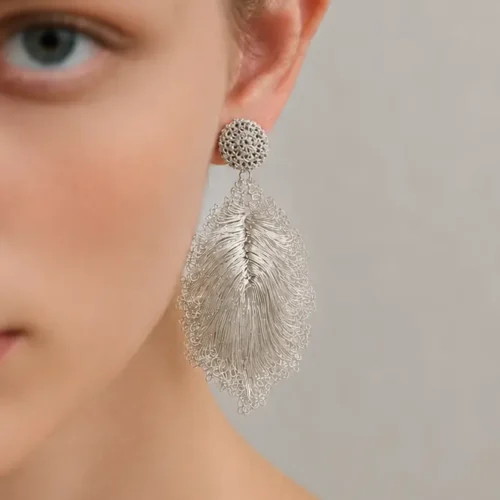
Silver wire leaf earrings translate the pleated structure of Licuala grandis into an elongated botanical form shaped from fine metallic lines. A slender central vein leads the eye downward while open strands extend to either side, creating a leaf that feels light, directional and alive beside the face.
This is not a direct copy of a broad fan-shaped leaf. Instead, OREYNE isolates the plant’s radiating order and draws it into a longer drop silhouette, where line, air and movement become four details to explore: the source leaf, the central vein, the open handwoven surface and the quiet sway of the finished form.
The Licuala Grandis Leaf Behind the Design
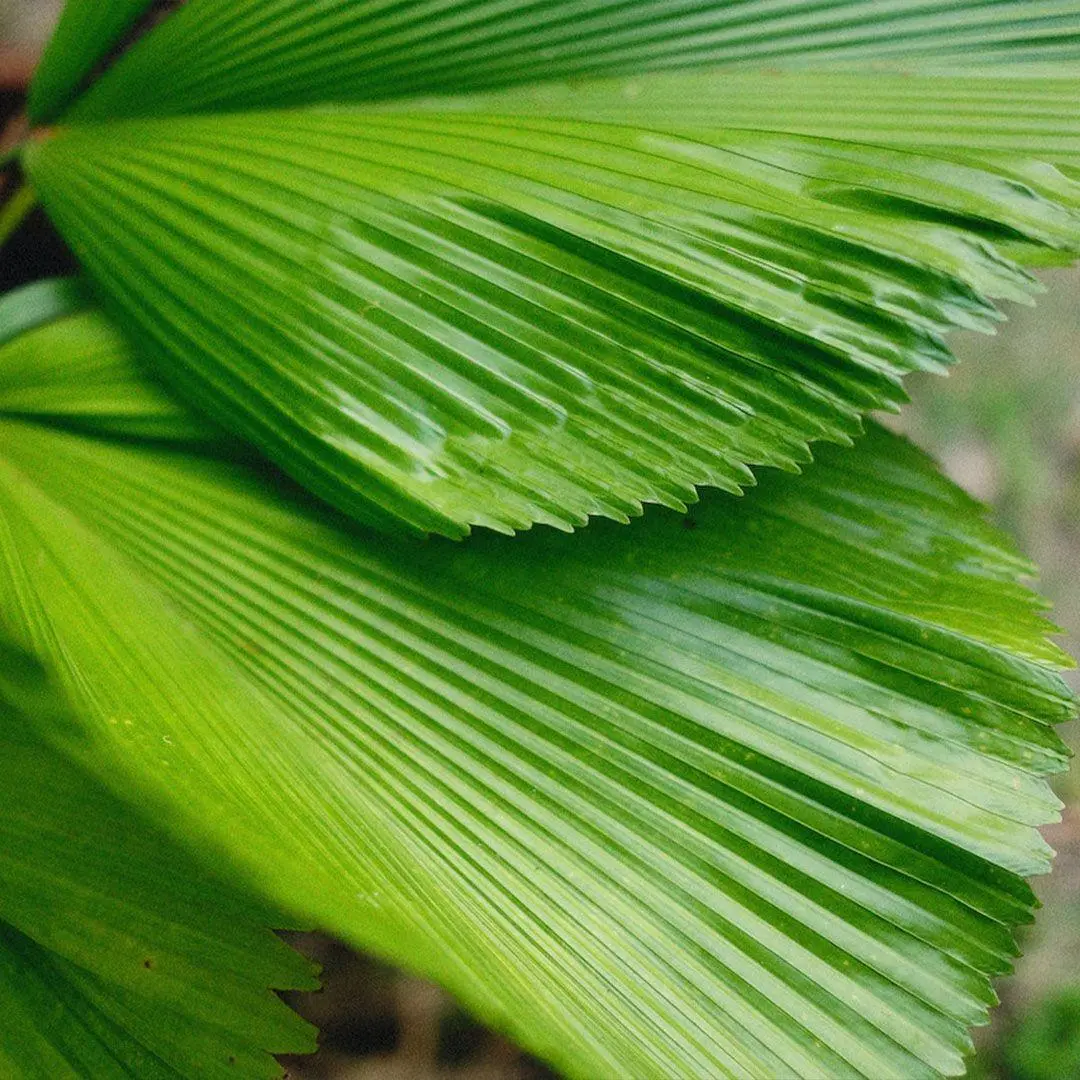
Licuala grandis is known for foliage that opens from a concentrated center in pronounced radiating pleats. Plants of the World Online at Kew records the species as native to the Santa Cruz Islands and Vanuatu, while its form offers a particularly clear study in line spreading through space.
The new design begins with that principle rather than with the outline of the whole leaf. Each visible direction in the plant suggests a path outward from a shared origin. In jewelry, those paths become a more vertical composition: a leaf-like drop that narrows through the center before opening gently at the sides.
This shift in proportion matters. The botanical reference remains present in the repeating lines, yet the silhouette is slimmer and more suspended. It gives the earrings their own identity as Licuala grandis inspired jewelry, made for motion rather than botanical imitation.
How Silver Wire Leaf Earrings Define a Central Vein
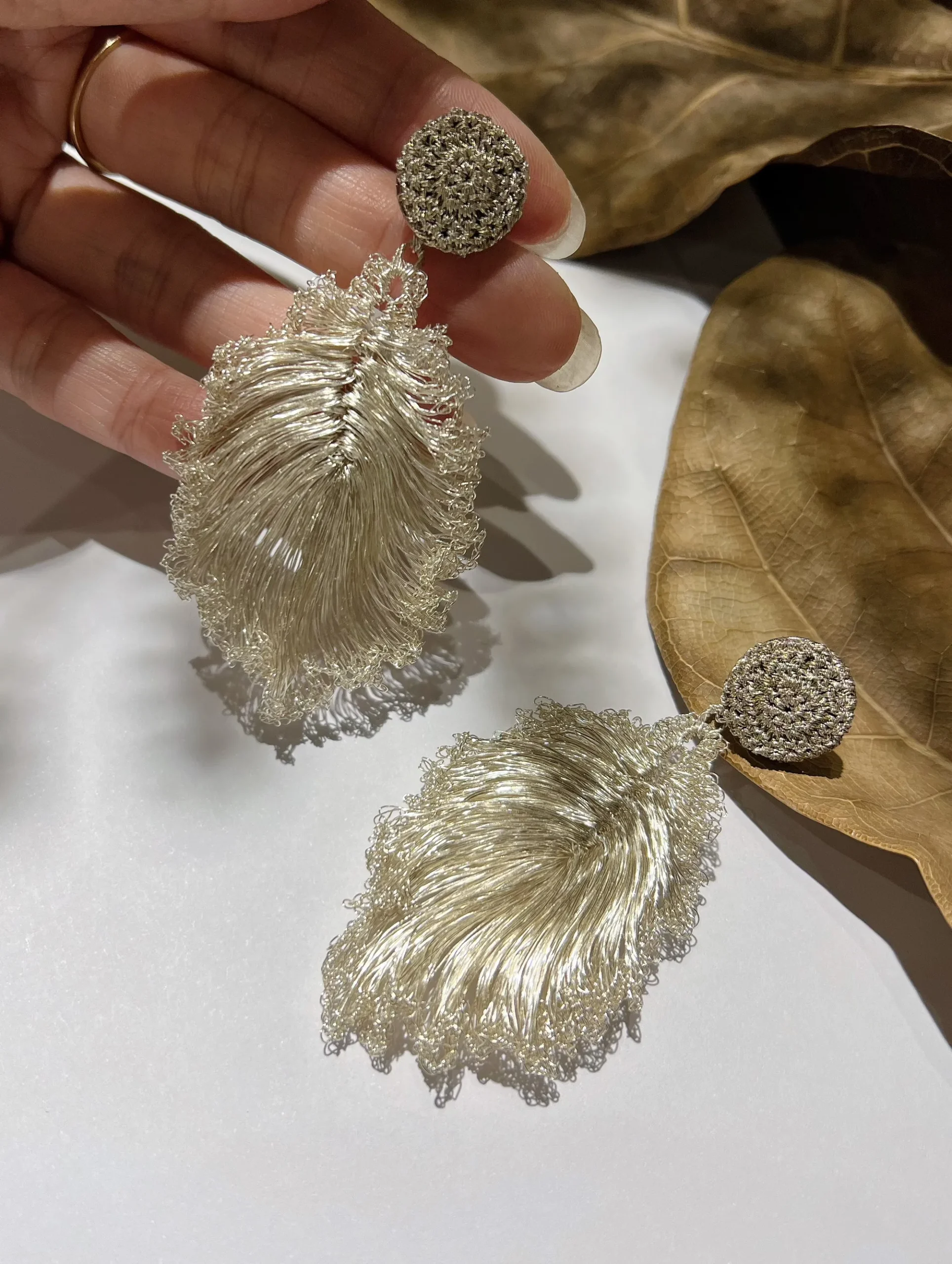
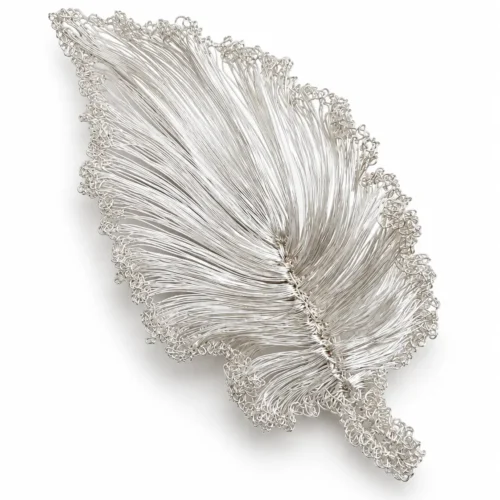
The central vein is the key structural gesture. It creates a clear vertical axis from which fine metal lines travel outward in measured arcs, giving the form both direction and an open, leaf-like breadth.
In silver wire leaf earrings, this spine also controls the relationship between symmetry and variation. The two sides answer each other without becoming mechanically identical; subtle shifts in curve keep the surface responsive to light and to the hand that shaped it.
Because the lines open from one narrow center, the eye reads the piece from top to bottom. The form appears to lengthen rather than spread across the ear, creating a graceful contrast between a concentrated start and an airy outer edge.
This construction allows the botanical source to stay legible at close range while the overall piece remains sculptural from a distance. The result is a leaf form defined by its internal architecture as much as its contour.
Handwoven Lines and an Open Leaf Structure
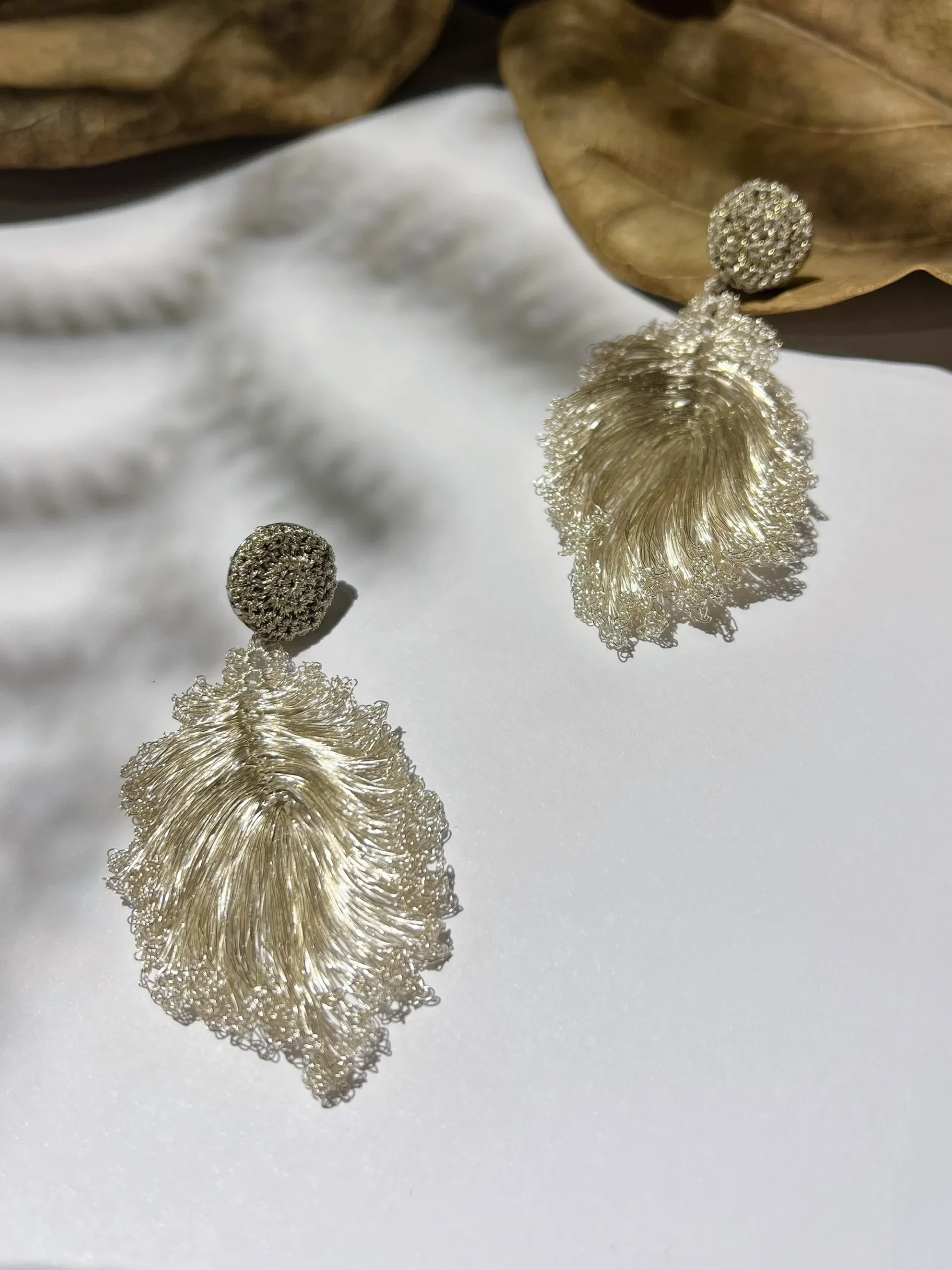
Each strand is arranged and shaped by hand before it becomes part of the finished surface. The process depends on a steady balance: the lines need enough proximity to suggest a leaf, and enough distance to allow the structure to breathe.
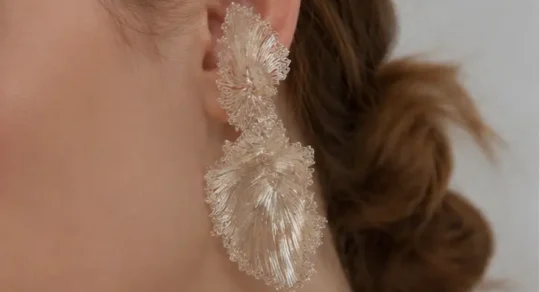
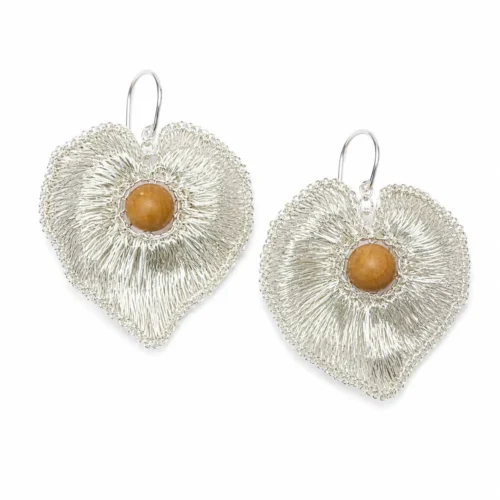
Space is therefore as important as metal. Light passes through the openings, and the colors behind the earring remain visible, so the form never becomes a solid ornament. This openness gives handwoven leaf earrings their changing outline against hair, skin and fabric.
Tension, spacing and curvature are adjusted across the form. Small differences are not flaws to erase; they are evidence of the work required to bring many individual lines into one coherent direction.
For this reason, silver wire leaf earrings reveal something new as they are viewed from different angles. Highlights collect along one curve, then move to another, while the open intervals keep the overall impression clear and light.
Light, Movement and the Elongated Drop
The finished pair measures approximately 30 × 50 mm and weighs about 8 g per pair. That longer proportion creates a vertical line beside the face, while the open wire construction keeps the form visually light rather than dense.
When worn, the leaf drop moves in small, independent shifts. Light travels across the metallic strands, passes through the spaces between them and returns as the angle changes. This is where the design feels most like a living botanical gesture: not fixed, but responsive.
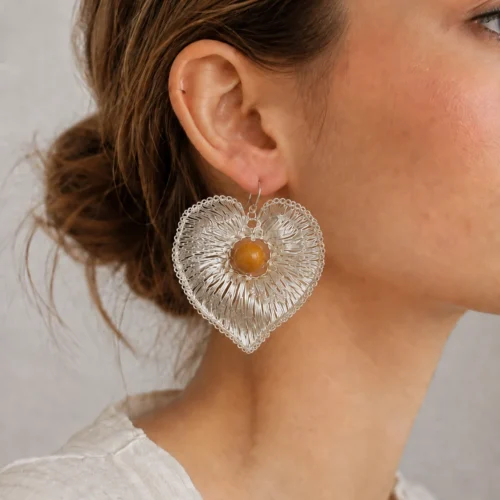
Silver wire leaf earrings work especially well with an exposed ear, a low bun or a clean side part, where the elongated profile has room to be seen. They also bring a sculptural note to simple knitwear, monochrome tailoring and softly structured evening pieces.
The materials support that wearability: hypoallergenic silver-tone metal wire with a long-lasting color finish, completed with 925 sterling silver posts. Together, line and light make these botanical statement earrings a study in vertical rhythm and quiet movement.
Discover the OREYNE Botanical Fan Palm Earrings
VIEW THE EARRINGSFrequently Asked Questions
What inspired the OREYNE silver wire leaf earrings?
The design is inspired by the radial pleats of Licuala grandis. OREYNE translates that botanical rhythm into an elongated leaf form with a defined central vein and open handwoven lines.
Are the earrings handmade?
Yes. Fine metallic wire is arranged, woven and shaped by hand. Small differences in tension, spacing and curvature are part of the handcrafted character of each pair.
How large and heavy are the earrings?
The finished pair measures approximately 30 × 50 mm and weighs about 8 g per pair.
What materials are used?
The body uses hypoallergenic silver-tone metal wire with a long-lasting color finish, and the posts are 925 sterling silver.